INTERNAL
TurfSync: High-Converting SaaS Landing Page Architecture
FrontendLanding PageSaaSSEOCore Web VitalsNext.jsTailwind CSS
TurfSync (B2B SaaS Marketing Frontend)
1. Problem
The business needed to market a comprehensive mini-soccer venue management platform. However, standard WordPress templates or unoptimized single-page applications (SPAs) often suffer from slow load times, poor SEO indexing, and high bounce rates. This leads to an unacceptably high Customer Acquisition Cost (CAC). The marketing frontend needed to instantly communicate enterprise-grade SaaS capabilities while maintaining perfect performance scores.
2. Solution
Architected a high-performance, component-driven marketing frontend utilizing strict Static Site Generation (SSG). The focus was entirely on Core Web Vitals, Search Engine Optimization (SEO), and Conversion Rate Optimization (CRO) to serve as an engineered growth engine for the business.
3. Architecture
- Frontend Framework: Next.js (Strict SSG focus)
- Styling & UI: Tailwind CSS (Fluid responsive design)
- Content Strategy: Component-driven JSON configuration (acting as a lightweight headless CMS)
- Asset Management: Next.js heavily optimized image pipeline (WebP/AVIF)
4. Key Engineering Decisions
- SSG over SSR/CSR: For public marketing pages, static generation was strictly enforced. By pre-rendering the HTML at build time, I eliminated database latency on page loads, ensuring a sub-second Time-To-First-Byte (TTFB) critical for SEO ranking.
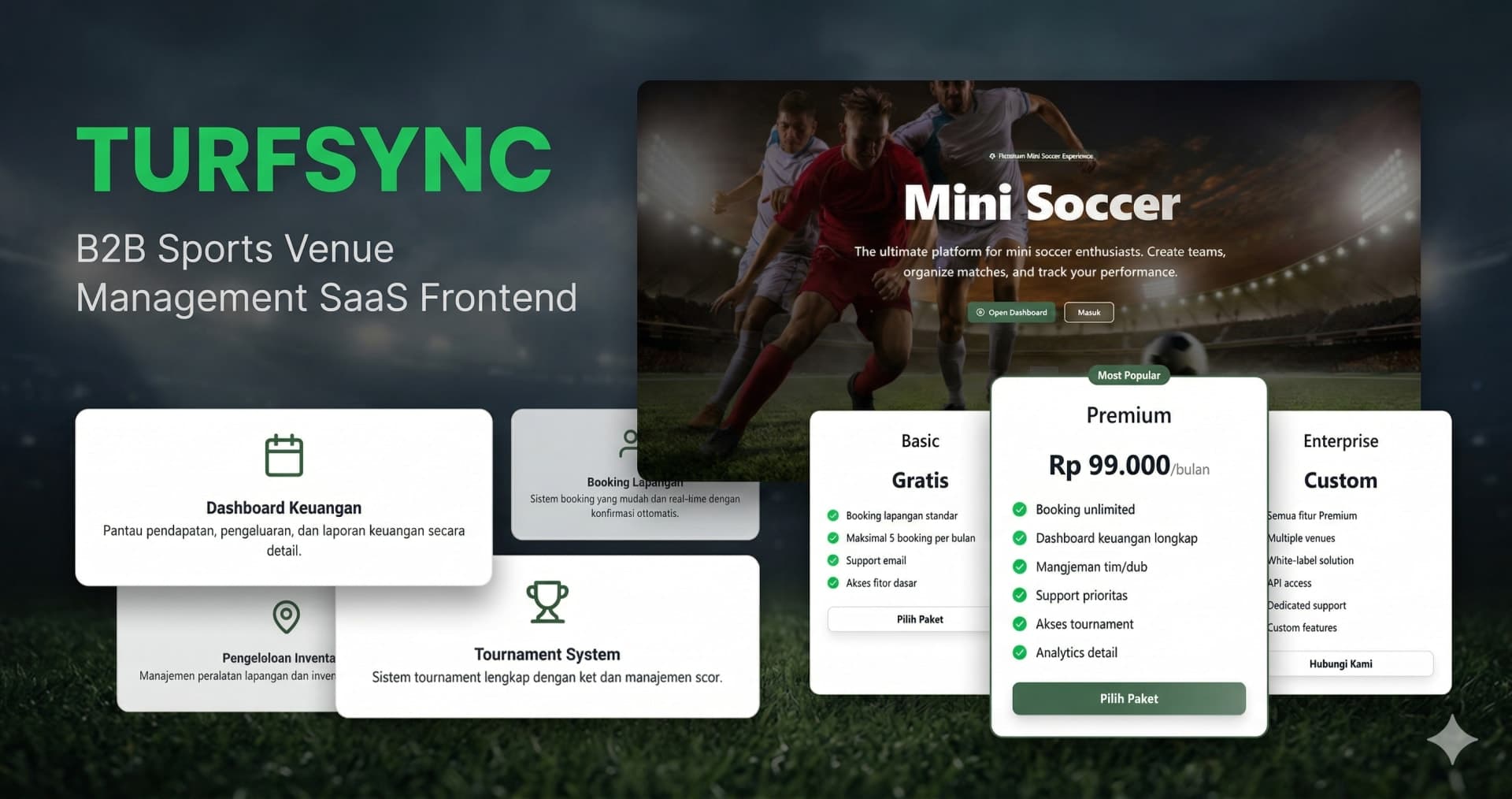
- Modular Component Design: Built complex UI sections (like the 3-tier Pricing Table and Feature Grids) as reusable components driven by a central configuration object. This allows marketing teams to perform A/B testing on pricing or copy without requiring structural HTML rewrites.
- Aggressive Asset Optimization: Dark-mode themes with large background images (like the stadium hero section) traditionally ruin loading speeds. I implemented an automated optimization pipeline using responsive
srcsetand eager/lazy loading boundaries to maintain aesthetic quality while keeping the Largest Contentful Paint (LCP) strictly under 2.5 seconds.
5. Challenges
- Balancing the aesthetic requirement for heavy, high-resolution visual assets against strict Google Lighthouse performance budgets.
- Implementing strict semantic HTML5 and JSON-LD structured data so that search engine crawlers could correctly parse and index the specific SaaS pricing tiers and features.
6. Result
- Achieved near-perfect Google Lighthouse scores across Performance, Accessibility, Best Practices, and SEO.
- Delivered a frictionless, mobile-responsive user journey that elevates the product's brand perception from a simple "booking site" to a premium "B2B SaaS platform".
- Created a highly maintainable codebase that allows rapid marketing iterations.
7. Future Improvements
- Integrate Edge computing middleware (e.g., Vercel Edge Functions) to serve localized pricing tables dynamically based on the user's geolocation without sacrificing static load speeds.
- Connect the component architecture to a true Headless CMS (like Sanity or Contentful) to give the marketing team complete, zero-code autonomy over content updates.